· 7 min read
How does Dubai desalinate water?
Learn how Dubai desalinates water using advanced SWRO technology. Discover the process, major facilities and environmental challenges of producing 495 MIGD daily.

How Does Dubai Desalinate Water? Inside the World’s Most Advanced Seawater Treatment Systems
Dubai’s desalinated water production reached a record 40.5 billion imperial gallons in Q3 2024 Dewa, reflecting an urgent reality: this desert metropolis depends almost entirely on seawater conversion for its survival. With approximately 42 percent of the UAE’s total water requirement coming from desalination plants UAE Government, understanding how Dubai desalinates water reveals both remarkable engineering achievement and the technological challenges of quenching a city’s thirst in one of the world’s most water-scarce regions.
Dubai’s Water Scarcity Challenge
Dubai faces severe natural water limitations. Located in an arid climate with minimal rainfall and negligible freshwater sources, the emirate has built its entire water infrastructure around desalination technology. The scale is staggering: DEWA operates facilities with a current capacity of 495 million imperial gallons per day (MIGD), with plans to expand to 735 MIGD by 2030 Dewa. This massive reliance on desalination isn’t unique to Dubai. The Gulf region produces approximately 70% of global desalination brine despite representing only half of global desalination capacity, largely due to the region’s extreme water scarcity and historically energy-intensive thermal desalination technologies.
The Technology: Seawater Reverse Osmosis (SWRO)
Dubai’s modern approach to desalination centers on Seawater Reverse Osmosis (SWRO), a membrane-based technology that has revolutionized water production in the region. DEWA is building water production plants based on SWRO technology, which requires less energy than Multi-Stage Flash distillation (MSF) plants WaterOnline, marking a significant shift from the thermal processes that dominated Gulf desalination for decades.
How SWRO Works: The Three-Stage Process
Stage 1: Pretreatment
Before seawater ever touches a reverse osmosis membrane, it undergoes extensive pretreatment to remove contaminants that could damage the delicate membrane systems. This typically involves:
- Coagulation and flocculation to aggregate suspended particles
- Dual media filtration (DMF) using layers of anthracite coal, sand, and garnet
- Cartridge filtration as a final polishing step
- Chemical dosing with antiscalants to prevent mineral precipitation
Membrane fouling is the main operational challenge that SWRO systems experience, reducing membrane permeability, permeate quality and leading to higher operational pressure. Effective pretreatment is critical for preventing fouling from suspended solids, organic matter, dissolved nutrients, biomass, and sparingly soluble salts.
Stage 2: High-Pressure Reverse Osmosis
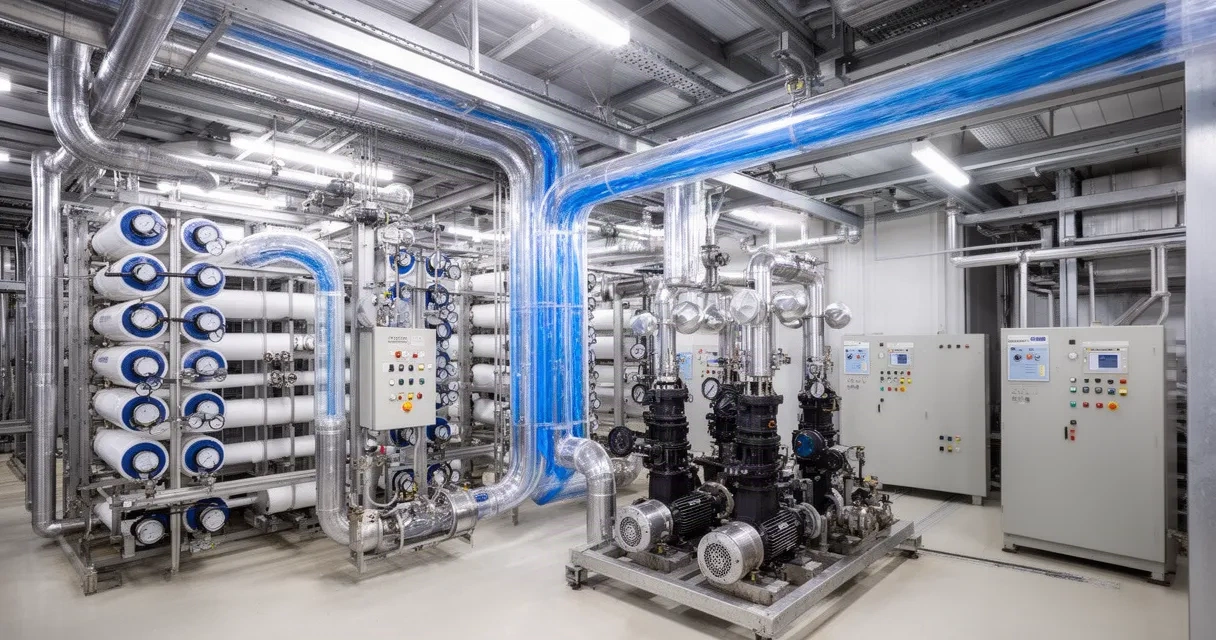
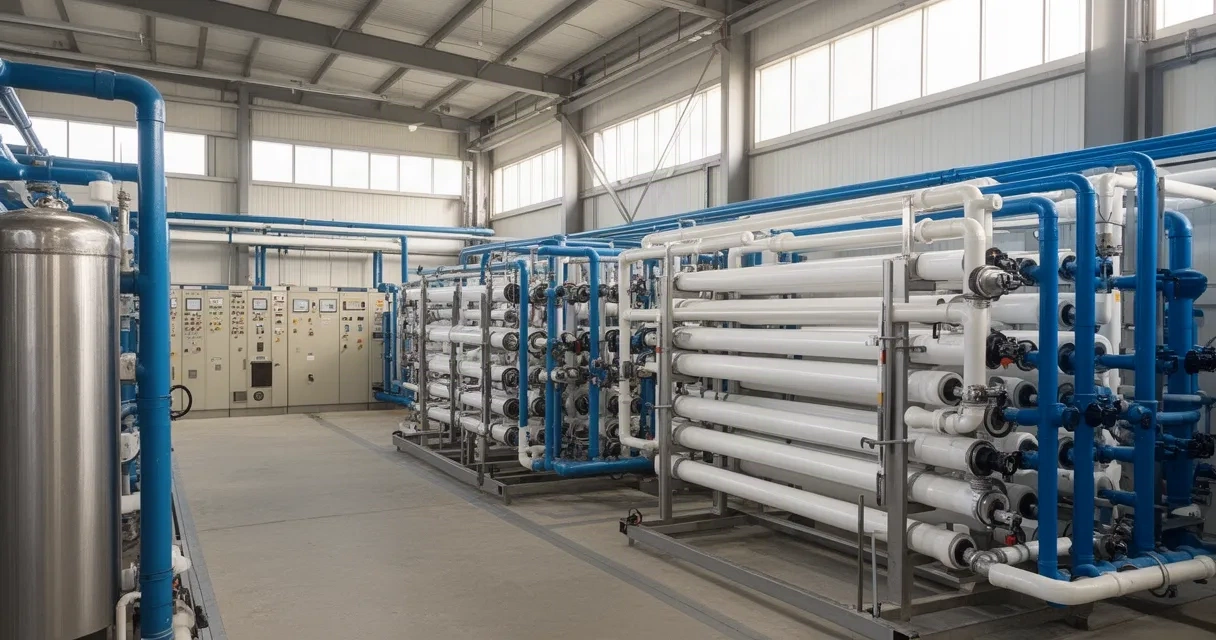
The pretreated seawater is pumped at extremely high pressure; typically 60-70 bar (870-1,015 psi), through spiral-wound membrane modules. These membranes feature thin-film composite polyamide materials with microscopic pores that allow water molecules to pass while rejecting dissolved salts. Modern SWRO systems typically operate at water recovery rates ranging from 40% to 55% Frontiers, meaning that for every 100 gallons of seawater processed, 40-55 gallons become freshwater while the remainder becomes concentrated brine. The pressure requirements are dictated by the need to overcome the osmotic pressure of the saline solution, the natural tendency of water to flow from lower to higher salt concentrations. Energy recovery devices (ERDs) have transformed SWRO economics. These systems capture the pressure energy from the concentrated brine stream and transfer it to incoming seawater, achieving energy transfer efficiencies of 93-97% ResearchGate. This innovation has been crucial in making SWRO competitive with thermal technologies.
Stage 3: Post-Treatment
The permeate water from RO membranes, while salt-free, requires additional treatment before distribution:
- pH adjustment (remineralization) to prevent pipe corrosion
- Disinfection to ensure microbiological safety
- Final mineral addition to meet drinking water standards
Major Desalination Facilities in Dubai
Jebel Ali Desalination Complex
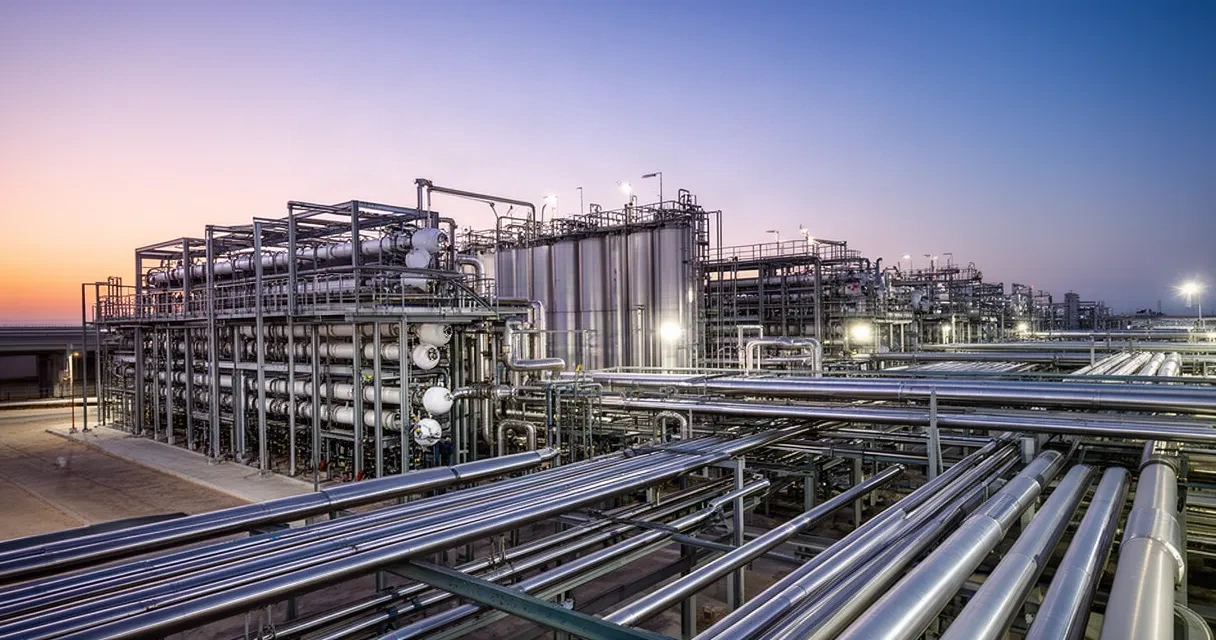
The Jebel Ali desalination plant is one of the largest water desalination facilities in the world, producing 490 MIGD of desalinated water per day Blackridge Research. Built by Acciona and Besix, this facility represents the world’s largest single-site desalination complex and serves as the backbone of Dubai’s water infrastructure. Located 40 km southwest of the Palm Islands, Jebel Ali operates exclusively using SWRO technology.
Hassyan Desalination Plant
Dubai’s newest mega-project, the Hassyan desalination plant, demonstrates the emirate’s commitment to sustainable water production. The plant utilizes SWRO technology with a production capacity of 180 MIGD and is expected to be completed by 2027, with the project currently 40.6% complete SolarQuarter. With an investment of AED 3.377 billion, this facility marks DEWA’s first use of the Independent Water Producer (IWP) model and represents the world’s largest desalination project based on SWRO technology.
Energy Efficiency: Why It Matters
Energy consumption represents approximately 50% of operational costs in SWRO facilities, making efficiency improvements directly translate to economic and environmental benefits. Modern SWRO plants have achieved remarkable progress: the practical thermodynamic limit of SWRO is about 1.6 kWh/m³ for desalting saltwater of 35 g/L with a 50% recovery, though real SEC of single-stage SWRO processes remains under 3 kWh/m³ MDPI. Current large-scale facilities typically consume between 3.9 and 5.6 kWh/m³ Taylor & Francis Online when accounting for pretreatment, the two-pass RO system, and post-treatment processes. This represents a dramatic improvement from early SWRO systems that consumed over 15 kWh per cubic meter. DEWA aims to produce 100% of desalinated water through a mix of clean energy and waste heat by 2030 WaterOnline, positioning Dubai as a leader in sustainable desalination. This shift toward renewable energy integration addresses both operational costs and the carbon footprint of water production.
Critical Operational Challenges
Membrane Fouling
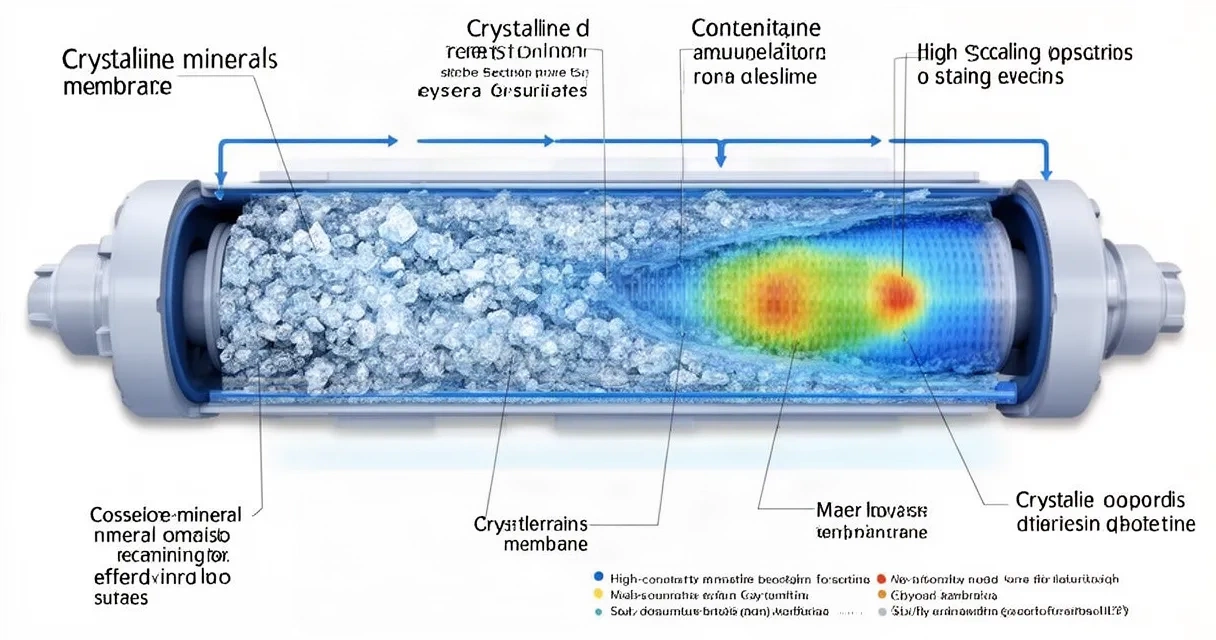
Despite sophisticated pretreatment, membrane fouling remains inevitable. Membrane fouling can be due to suspended and colloidal particles, organic matter, dissolved nutrients, biomass and sparingly soluble salts PubMed Central. Biofouling; the growth of bacterial biofilms on membrane surfaces is particularly challenging in warm Gulf waters where microorganisms thrive. Advanced monitoring techniques now track fouling indicators including:
Silt Density Index (SDI) for particulate fouling Modified Fouling Index (MFI) for colloidal particles Bacterial Growth Potential (BGP) for biological fouling Adenosine Triphosphate (ATP) measurements for microbial activity
Regular chemical cleaning cycles are necessary, but excessive cleaning reduces membrane lifespan. Optimal pretreatment and real-time monitoring systems have become essential for balancing membrane protection with operational efficiency.
Brine Disposal and Environmental Impact
Every gallon of freshwater produced generates approximately 1-1.5 gallons of concentrated brine containing roughly twice the salt concentration of seawater. SWRO brine can contain up to 50% more total dissolved solids, including chemical residues from pre-treatment and cleaning processes such as NaOCl, FeCl₃, AlCl₃, H₂SO₄, HCl, and NaHSO₃ Frontiers. The environmental challenges are significant. The shallow depths and restricted circulation of the Arabian Gulf make it particularly vulnerable to brine accumulation. Elevated salinity can stress marine ecosystems, affecting seagrass beds, coral reefs, and fish populations. The chemical additives in brine, including coagulants, antiscalants, and cleaning agents, add to the environmental burden. ###### Dubai and other Gulf states are exploring mitigation strategies including:
Enhanced diffuser systems for rapid brine dilution Offshore discharge locations in deeper waters Brine mining for salt and mineral recovery Co-disposal with treated wastewater to reduce concentration
The Role of Optimization and Smart Technology
As SWRO systems have matured, the focus has shifted from basic operation to sophisticated optimization. Modern facilities employ advanced process control systems that continuously adjust operating parameters (feed pressure, flow rates, chemical dosing) to maximize efficiency while minimizing fouling. Machine learning and artificial intelligence are increasingly being applied to predict maintenance needs, optimize energy consumption, and extend membrane lifetime. These systems analyze vast amounts of operational data to identify patterns invisible to human operators, enabling predictive maintenance and dynamic optimization that can reduce energy consumption by 3-10% while extending membrane life by 20-30%. Real-time monitoring of membrane performance indicators allows operators to adjust conditions before problems develop. This proactive approach reduces the frequency of chemical cleanings, lowers chemical consumption, and improves overall system reliability.
Looking Ahead: Dubai’s Water Future
DEWA plans to increase its water desalination capacity to 735 MIGD by 2030 from 495 MIGD at present Dewa, driven by population growth and economic expansion under Dubai’s Economic Agenda D33 and the Dubai 2040 Urban Master Plan. The future of Dubai’s water security lies in three parallel developments: continued expansion of SWRO capacity, integration with renewable energy sources, and adoption of advanced optimization technologies. As membrane materials improve, energy recovery devices become more efficient, and AI-driven optimization becomes standard, the gap between current operations and thermodynamic limits will continue to narrow. Dubai’s journey from complete water scarcity to reliable abundance through desalination represents one of engineering’s great triumphs. The massive infrastructure, sophisticated technology, and continuous innovation required to deliver nearly half a billion gallons of freshwater daily from the sea demonstrates both human ingenuity and the complex challenges of sustainable development in water-scarce regions. As global water stress intensifies, Dubai’s experience offers valuable lessons for cities worldwide facing similar challenges.