· 10 min read
Can desalination be powered by solar?
The Answer Might Surprise You

If you’ve ever wondered whether we can turn seawater into drinking water using just sunshine, here’s the short answer: Yes, and it’s already happening in over 35 countries around the world.
Solar-powered desalination isn’t some far-off technology of the future. It’s operating right now in remote villages, luxury resorts, emergency disaster zones, and even at utility scale. The market is booming, projected to grow from $2.54 billion in 2024 to somewhere between $4.34 and $6.2 billion by 2032. Even more impressive? Scientists just figured out how to do it without expensive batteries.
Let’s dive into how this works, where it’s being used, and whether it could help solve our planet’s growing water crisis.
The Two Main Ways to Desalinate Water Using Solar Power
When we talk about solar desalination, there are two main approaches; think of them as two different recipes for the same dish.
Solar Panels + Reverse Osmosis: The Electric Route
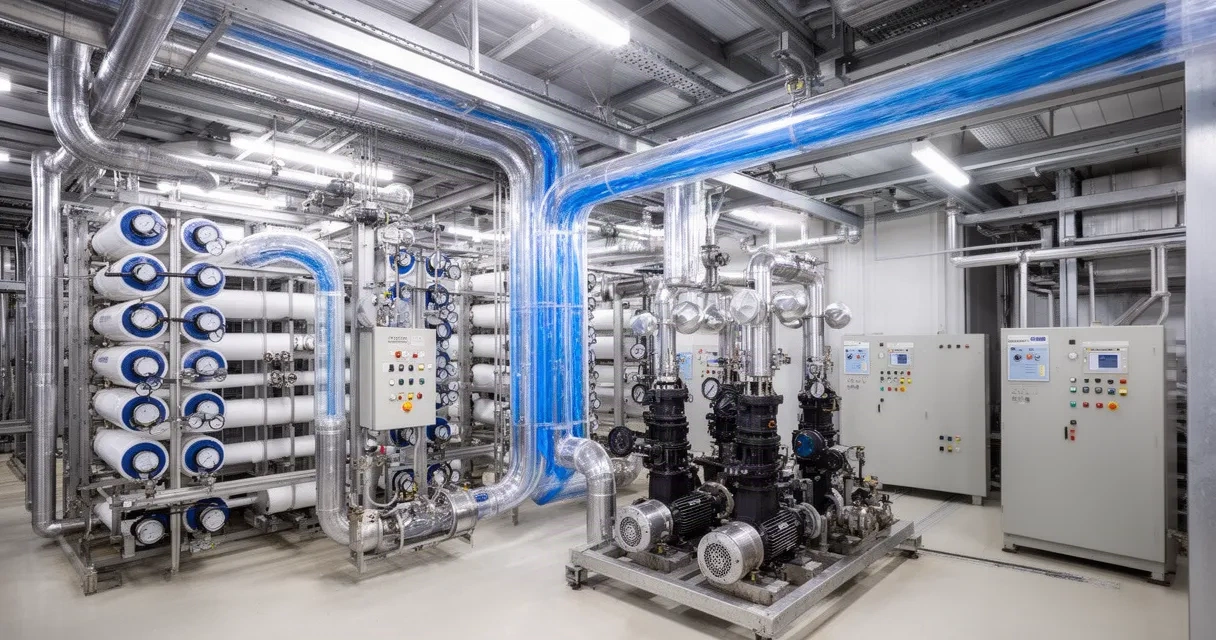
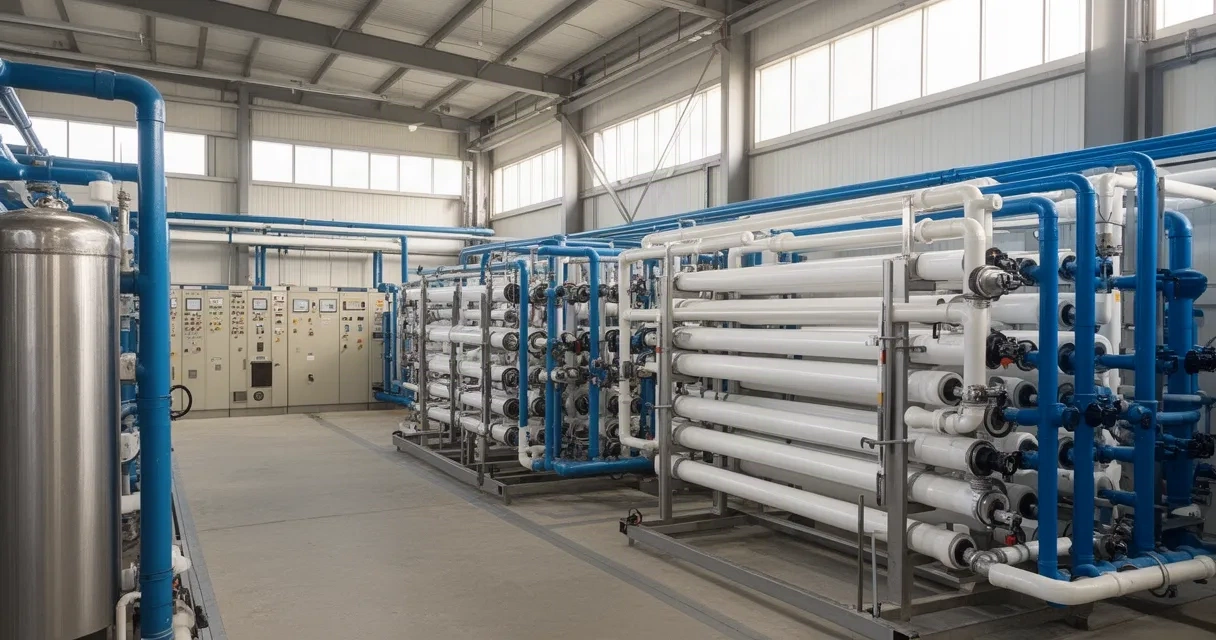
This is probably what you’re picturing. Solar panels capture sunlight and convert it to electricity, which then powers pumps that push seawater through special membranes at high pressure. The membranes act like incredibly fine filters, letting water molecules through while blocking salt and other contaminants.
This method uses what’s called reverse osmosis (RO), and it’s remarkably efficient. Modern solar-powered RO systems consume just 2-4 kilowatt-hours of energy per cubic meter of water produced; that’s less than running your dishwasher for one cycle to produce about 264 gallons of fresh water.
Here’s what makes this approach practical: Companies like Elemental Water Makers have been operating these systems since 2012, serving remote communities in dozens of countries. Their systems can produce anywhere from 4,300 to 100,000 liters per day (roughly 1,100 to 26,000 gallons), with water costs landing around €1-2 per cubic meter when you factor in everything.
Solar Heat + Evaporation: The Thermal Route
The second approach mimics nature’s water cycle. Concentrated solar collectors focus sunlight to create heat, which then drives evaporation processes. Think of it as a high-tech version of leaving a bowl of saltwater in the sun; the water evaporates, leaving the salt behind, and then you capture and condense the pure water vapor.
This thermal approach can achieve water costs as low as $0.88 per cubic meter in recent field tests. It’s particularly effective in regions with intense sunlight and can even utilize waste heat from other industrial processes.
The Battery Problem (And Its Surprising Solution)
For years, there was one big obstacle to solar desalination: the sun doesn’t shine 24/7. Traditional desalination plants need steady, consistent power to operate efficiently. The obvious solution was to use batteries to store solar energy, but battery systems are expensive, require maintenance, and add significantly to project costs.
Then in October 2024, researchers at MIT unveiled a game-changing breakthrough.
Instead of storing electricity in batteries to smooth out power variations, they created a system that adjusts to the sun’s intensity 3 to 5 times per second. When a cloud passes overhead, the system instantly dials down its power consumption. When the sky clears, it ramps back up. This “flow-commanded current control” system can use 77% of available solar energy directly; that’s 91% more efficient than traditional solar-powered desalination systems.
The MIT team tested their battery-free system for six months in New Mexico using brackish groundwater wells. Despite variable weather conditions, the system produced up to 5,000 liters (about 1,300 gallons) of drinking water per day. According to MIT professor Amos Winter, “Being able to make drinking water with renewables, without requiring battery storage, is a massive grand challenge. And we’ve done it.”
This breakthrough doesn’t mean batteries are obsolete; some systems still use them for 24/7 operation. But it does mean solar desalination can now work effectively in off-grid locations without the expense and complexity of energy storage.
Where Solar Desalination Is Actually Working Today
The real proof is in the pudding, and solar desalination has plenty of success stories around the world.
Small Communities Finding Water Independence
In Kiunga, Kenya, a coastal fishing village had a serious problem. They had no connection to the electrical grid, and their brackish groundwater wasn’t safe to drink. GivePower installed a solar-powered reverse osmosis system that now produces 35,000 liters of clean water daily, serving thousands of residents with completely off-grid operation.
In Senegal, a community of 600+ villagers in Ourong faced a different challenge. Their groundwater table had been contaminated with salt, and they were paying $6 per cubic meter for trucked-in water. A solar desalination system installed during COVID-19 now provides water at just €1-2 per cubic meter; a 67-75% cost reduction.
On Kutubdia Island in Bangladesh, where freshwater scarcity threatened the entire community, solar-powered desalination addressed coastal water contamination that conventional solutions couldn’t solve.
Emergency Response and Disaster Relief
When Typhoon Haiyan devastated the Philippines in 2013, mobile solar-powered RO units were deployed within 48 hours. Each unit produced 2,500 gallons per day without needing external power or fuel, serving medical camps and refugee shelters when traditional infrastructure had been destroyed.
This disaster-ready capability makes solar desalination a crucial tool for humanitarian organizations. These systems can be containerized, shipped anywhere in the world, and start producing clean water as soon as they’re unpacked and the sun comes up.
Practical Applications Beyond Drinking Water
A farm in northern Mexico uses a solar-powered RO system producing 7,500 gallons daily to irrigate 25 acres of farmland in an arid zone. The switch to clean, desalinated irrigation water improved crop yields by 35% all without requiring any connection to the electrical grid.
Even luxury eco-resorts are getting in on the action. One private island resort installed a 10,000-gallon-per-day integrated system with battery backup, achieving 100% solar-purified drinking water. The result? A 90% reduction in plastic bottle waste and significantly lower operating costs, all while marketing their environmental credentials to guests.
The Economics: Is It Actually Affordable?
Let’s talk money, because that’s usually what determines whether a technology succeeds or fails.
Solar panel costs have plummeted 90% since 2010, from $0.46 per kilowatt-hour to just $0.043 per kilowatt-hour in 2024. Installation costs have dropped nearly 80% in the same period. This dramatic cost reduction is the primary driver making solar desalination competitive with conventional methods.
The U.S. Department of Energy has set target costs of $0.50 per cubic meter for large-scale seawater desalination and $1.50 per cubic meter for small-scale high-salinity systems. Recent projects are hitting these targets. Saudi Arabian projects are achieving around $0.50 per cubic meter, and field-tested solar thermal systems have demonstrated $0.88 per cubic meter.
For comparison, conventional seawater desalination typically costs $0.50-1.00 per cubic meter. Solar desalination is now competitive, especially in regions with high solar irradiance and expensive grid electricity.
Yes, the upfront capital costs are typically 20-30% higher for solar systems compared to conventional desalination. But here’s the crucial difference: operational costs drop significantly because the fuel (sunlight) is free. Many solar retrofit projects achieve payback periods of just 2-4 years. After that, you’re essentially getting free water production.
Energy represents 50-60% of desalination’s operating expenses. When you eliminate or dramatically reduce energy costs, the economics shift dramatically in favor of solar power.
Where Does Solar Desalination Work Best?
Solar desalination isn’t the right solution everywhere, but it’s ideal in specific conditions.
Perfect locations include:
Island nations with limited grid capacity, high electricity costs, and abundant sunshine. The Caribbean, Pacific islands, and Mediterranean islands are prime candidates.
The Middle East and North Africa, which dominate the solar desalination market. Countries like Saudi Arabia, UAE, and Qatar combine acute water scarcity with some of the world’s best solar resources. Saudi Arabia’s Vision 2030 plan specifically prioritizes solar-powered water projects.
Remote coastal or arid regions with no grid connection. If extending power lines would cost millions, solar desalination becomes the economical choice.
Developing nations with growing populations, water stress, and limited infrastructure. Sub-Saharan Africa and Southeast Asia have enormous potential for these systems.
According to one study, 10% of Mauritania (103,070 square kilometers) is optimal for solar desalination deployment. Jordan, with 300+ sunny days per year and 3,125 hours of annual sunshine, represents another ideal location.
The technology works at multiple scales. Small-scale systems (4-100 cubic meters daily) serve remote villages, island resorts, and farms. Community-scale systems (50-500 cubic meters daily) support towns and small cities. Utility-scale projects (10,000+ cubic meters daily) can supply municipal water systems, with projects like Saudi Arabia’s NEOM demonstrating large-scale feasibility.
The Environmental Impact
Beyond the economics, solar desalination offers significant environmental benefits.
Conventional desalination produces 1.7-2.8 kilograms of CO₂ per cubic meter of water from operational emissions. Solar systems can reduce this to around 1.80 kg CO₂ per cubic meter; and as grids become greener, this number continues to fall. For truly off-grid solar systems, operational emissions approach zero.
This matters more than you might think. The world’s desalination plants currently produce about 142 million cubic meters of fresh water daily while generating massive amounts of greenhouse gases. Switching even a fraction of this capacity to solar power would significantly reduce the sector’s carbon footprint.
Moreover, solar desalination aligns with global climate commitments and renewable energy mandates. Countries pursuing net-zero emissions targets increasingly view solar-powered water treatment as essential infrastructure.
Current Challenges and How They’re Being Addressed
Solar desalination isn’t perfect, and it’s important to be realistic about the challenges.
Intermittency has been the traditional concern, what happens at night or during cloudy weather? The solutions include the MIT battery-free adaptive system, water storage tanks (storing product water instead of electricity), thermal energy storage for solar thermal systems, grid connections that use the grid as a “virtual battery,” and hybrid systems combining solar with wind power.
Scale limitations have constrained utility-scale deployment, though this is changing rapidly. Large-scale solar desalination projects are now operational in Saudi Arabia, Jordan, and other countries, proving the technology works beyond small community systems.
Higher upfront costs remain a barrier in capital-constrained regions, but falling solar panel prices, government incentives, and international development funding are addressing this challenge. The 2-4 year payback periods also make financing more attractive.
Technical expertise for maintenance can be limited in remote areas, though modern systems are increasingly plug-and-play with remote monitoring capabilities. Some systems have operated for 19 months without chemical cleaning, far exceeding conventional RO maintenance intervals.
The Future Is Already Here
By 2030, global solar desalination capacity is expected to reach 500,000 cubic meters per day; enough to serve millions of people. The U.S. Department of Energy has allocated $21 million for solar desalination research and development. The World Bank has funded over 20 desalination projects. Government subsidies in water-stressed nations are accelerating adoption.
Emerging technologies promise even better performance. Advanced membranes made from materials like graphene and aquaporin are reaching commercial scale. Hybrid systems combining multiple renewable energy sources are smoothing out intermittency issues. AI-powered optimization (like the technology Clewas provides) maximizes solar utilization and reduces operational costs even further.
Geographic expansion is accelerating beyond the Middle East. Sub-Saharan Africa has major growth potential. Southeast Asian island nations are ideal candidates. Chile and Peru’s coastal deserts represent untapped markets. The Mediterranean region, from Spain to North Africa, offers excellent solar resources and water scarcity.
So, Can Desalination Be Powered by Solar?
Absolutely; and not just in theory. Solar desalination is operational today in dozens of countries, from small villages in Kenya to large-scale projects in Saudi Arabia. The technology is mature, costs are competitive in the right locations, and recent breakthroughs have eliminated major barriers like battery dependence.
The question isn’t really “Can it be done?” anymore. The question is “Where and how should we deploy it?” For regions with abundant sunshine, high electricity costs, water scarcity, or no grid connection, solar desalination is increasingly the smart choice—economically and environmentally.
As climate change intensifies droughts and population growth strains water resources, solar-powered desalination offers a proven, scalable solution. The technology will continue improving, costs will keep falling, and deployment will expand. What started as an experimental concept is now a practical tool for water security in the 21st century.
The sun has been evaporating seawater and creating rain for billions of years. Now, we’ve just figured out how to harness that same solar energy to create fresh water wherever we need it most.
Resources: